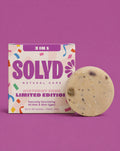
Skip, beat, done with microplastics. We say: let's do it!
It probably hasn't escaped your notice. The story of Microplastic. It feels like something you, as a conscious sustainable Dutch person, have little influence on. Today I'm going to prove you wrong, having 'dived into it' for a bit. Do you already know the story about microplastics? Then read one of our other blogs or just scroll to the tips; perhaps there's still something new among them.
What are Microplastics?
Microplastics are annoying minuscule pieces of plastic less than 5 mm in size that we unfortunately cannot get rid of. These plastic pieces form as larger pieces of plastic break down into smaller and smaller parts. Think of plastic waste. Microplastic or nanoplastic (even smaller pieces of plastic) float in oceans and rivers and, unfortunately, cannot be cleaned up. Microplastics are also found in the air, in the soil, and perhaps worst of all: in our food (microplastics have been found in fish, shellfish, tap water, and for example, honey and tea bags). We don't want that! 😟

Where do microplastics come from?
Well, this may not be new, but most microplastics end up in the environment due to the enormous amount of plastic waste (secondary microplastics): bags, bottles, fishing nets, etc. These break down into smaller and smaller plastic particles. But also the wear and tear of car tires and, I was never so aware of this, the wear and tear of synthetic clothing... When washing synthetic clothing, a lot of synthetic fibers end up in the water. I immediately dove into my closet after reading this information. It's not too bad, but there is still a lot of synthetic clothing. What to do, right? Throwing it away is also a waste, isn't it? But wearing it leads to washing, and there we go again... Hmm, I'm going to think about it a bit more. Maybe to the thrift store, then at least someone else doesn't have to buy new (synthetic) clothes, and this might help prevent the production of synthetic clothing. I can also look for 'something new but made of cotton' myself. Do you also think in circles so often? Me more and more: what if I do this and what if I do that? I think it starts there too: what do I leave behind?
In addition to the aforementioned microplastics, a small part of the microplastic in the environment comes from products we use daily (primary microplastics), such as cosmetics, personal care products, cleaning products, and detergents.
Scrub products, whitening toothpastes, but also abrasive cleaners contain hard beads for an abrasive effect. These beads are called microbeads. These beads are found in the environment and are not biodegradable. I remember seeing this for the first time about 10 years ago, and back then I wasn't even that concerned with the environment, but more with what I liked: a transparent scrub with super funny colored beads. Well, the beads aren't that funny, because if I think about it, they're still floating around somewhere, and maybe I've eaten them again. Intense! Fortunately, I didn't like the scrub at all, and I started making my own with sugar and oil: a great scrub for little money 😟
Oh, and detergents also seem to be full of microplastics that make your laundry nice and soft but are super harmful to nature.

What to do?
Cosmetic creams, lipsticks, shampoos, shower gels, and conditioners often contain plastic for various effects on the skin or hair.
We can certainly do something about that. We at Shampoobars.nl and you too, as an Ecowarrior! We ensure that there is absolutely no microplastic in your Shampoo, Conditioner, or Body Bar. Our accessories are also made from natural materials such as cotton, bamboo, or other beautiful things from nature that are completely biodegradable. No hidden ingredients, just what you see is what you get, so you can lather up and moisturize (with, for example, our plastic-free Body Lotion) with peace of mind! You therefore prevent secondary microplastics by not having to throw away a plastic bottle, but also primary microplastics because no form of plastic is added to our products.
The effectiveness of our products comes from nature, and it has so much to offer us!
Is microplastic harmful to me?
In principle, there is no acute health risk if you ingest microplastics. But I don't like the idea. You supposedly ingest a little less than 1 grain of salt of microplastic per week. This also depends on eating habits and can therefore be much more. The more microplastics you ingest, the greater the amount of toxic substances you are exposed to through the plastic.
The serious question then is what the long-term consequences are. Plastic does not belong in your body and contains harmful substances such as plasticizers and stabilizers that can affect your hormone balance or immune system. What these consequences are is being scientifically investigated.

TIPS
Let's go through some tips on what you can do to prevent the spread of micro-particles.
Check what's inside!
The substances below are found in many daily products and are sometimes difficult to filter from the endless ingredient lists. These are common microplastics:
- Toothpaste: Polyethylene (PE) and/or Polyethylene glycol;
- Liquid soap: Polystyrene/Acrylates copolymer;
- Scrub products: Polyethylene (PE) and/or Polypropylene (PP).
You can also download an app that helps you scan ingredient lists and quickly shows whether a product contains microplastics.
Grocery shopping
- With your own brought bag!
- And when grocery shopping, you can already consider plastic waste. For example, go to the butcher with your own container or to the greengrocer with reusable bags.
- Avoid products with plastic as much as possible and choose bulk packaging instead of individually wrapped products.
- Choose sustainable and environmentally friendly cosmetics. Do you have a question about our products? Our customer service is ready to help you find the right personal care products for your skin and hair.
Choose sustainable clothing
- Choose natural (and organic) fabrics such as: cotton, linen, or wool.
- Wash your clothes less often (linen and cotton reduce the chance of perspiration, so you don't have to wash your clothes as often. Airing them out in the garden often helps! Still looking for a nice natural deodorant? We have it for you!
- The circle is complete if you also take a look in a nice vintage shop or at a thrift store. There are often real gems there!
Car
- Leave the car at home as much as possible, and take the bike or walk.
- Change your winter tires on time and ensure the correct tire pressure, because then the tires wear less, and go to a local garage. That saves extra kilometers.
Why ShampooBars.nl products? Read our story and personal motivations to make the world a little more beautiful!
Source: consumentenbond.nl
Before You Go…
Here are a few handpicked articles to inspire your next self-care moment.